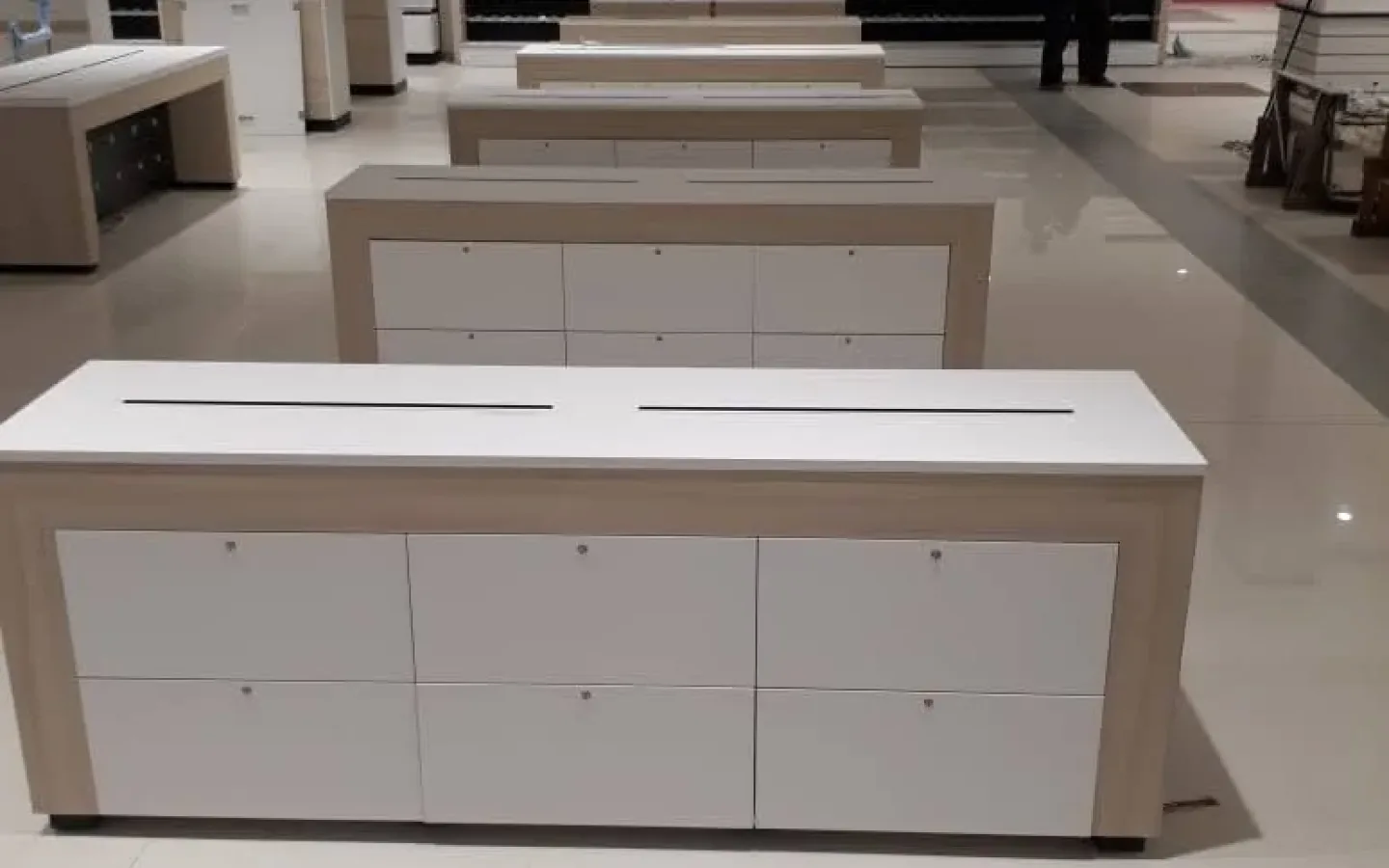
Turn the design into usable instructions
Prepare an updated measured plan identifying each piece of furniture. Distinguish new units from reused elements and items needing dismantling or relocation. Keep one agreed working version and identify who can approve changes.
For shelves, display units and modular arrangements, retain product codes, instructions and manufacturer documents. A reference photograph communicates the desired appearance but does not replace assembly information. Flag sensitive materials and components with a specific sequence.
Check the premises before delivery
Measure the route from unloading to the installation area, including doors, corridors, shared areas and different floors. Tall or long units may need working space beyond their final footprint. Clear photographs support rather than replace measurements.
Describe walls and flooring and identify planned fixings. Assess the mounting method against the actual support and components. Coordinate lighting, utilities and specialist work with the relevant professionals; these tasks are not automatically included in furniture assembly.
Organise deliveries without filling the whole shop
Count packages while preserving labels and component references. Set aside an area for materials and space to open boxes. Where several suppliers deliver on different dates, share the schedule and identify which parts each stage requires.
Keep accessories and hardware organised. Separate parts for installation, spares and empty packaging. If the shop remains open, agree the working areas, customer presence and permitted hours. A date alone does not define these conditions.
Agree the sequence and decision maker
Some units need positioning first to keep work areas accessible. Agree an indicative sequence and identify issues that may stop progress, such as missing pieces, changed dimensions or layout decisions. Keep an authorised contact available.
Describe any proposed change and assess its effect on tasks, materials and timing before proceeding. An aesthetic change can require different work. Keep a record of agreements and avoid important decisions based on conflicting informal instructions.
Review against the agreed plan
Check position, completeness, moving parts and visible finishes. Retain the manufacturer’s use and loading guidance; assembly does not change a component’s limits. Separate completed furniture work from outstanding tasks by other professionals.
Record missing components and open questions. Keep instructions, module references and identified hardware, and agree how packaging will be handled. A clear handover explains what is ready, what still needs checking and who is responsible.